8 Reasons To Choose Fire-Resistant James Hardie Siding
Home defense starts long before a threat ever reaches your front door. In fact, one of the most critical decisions you can make for your property is choosing what lines your outside walls. At Safe Harbor Exteriors, we partner with Kansas City homeowners to prioritize both durability and safety, which is why James Hardie fiber cement siding is our top recommendation. Engineered with a premier Class A fire rating, Hardie board acts as a protective shield that refuses to ignite or act as fuel, the way traditional wood or vinyl siding does.
Investing in this kind of exterior protection provides peace of mind, but it also comes with a lot of industry jargon. To truly appreciate how this material guards your home, it helps to clear up a common misconception about what fire resistance looks like in action.
What Fire Resistance Really Means for Your Exterior
It's easy to use "fire-resistant" and "fireproof" interchangeably, but they mean very specific things in the world of building materials. Fireproof means a material withstands any fire completely unscathed. That level of absolute protection is rare and typically applies to full structural assemblies rather than a single exterior product.
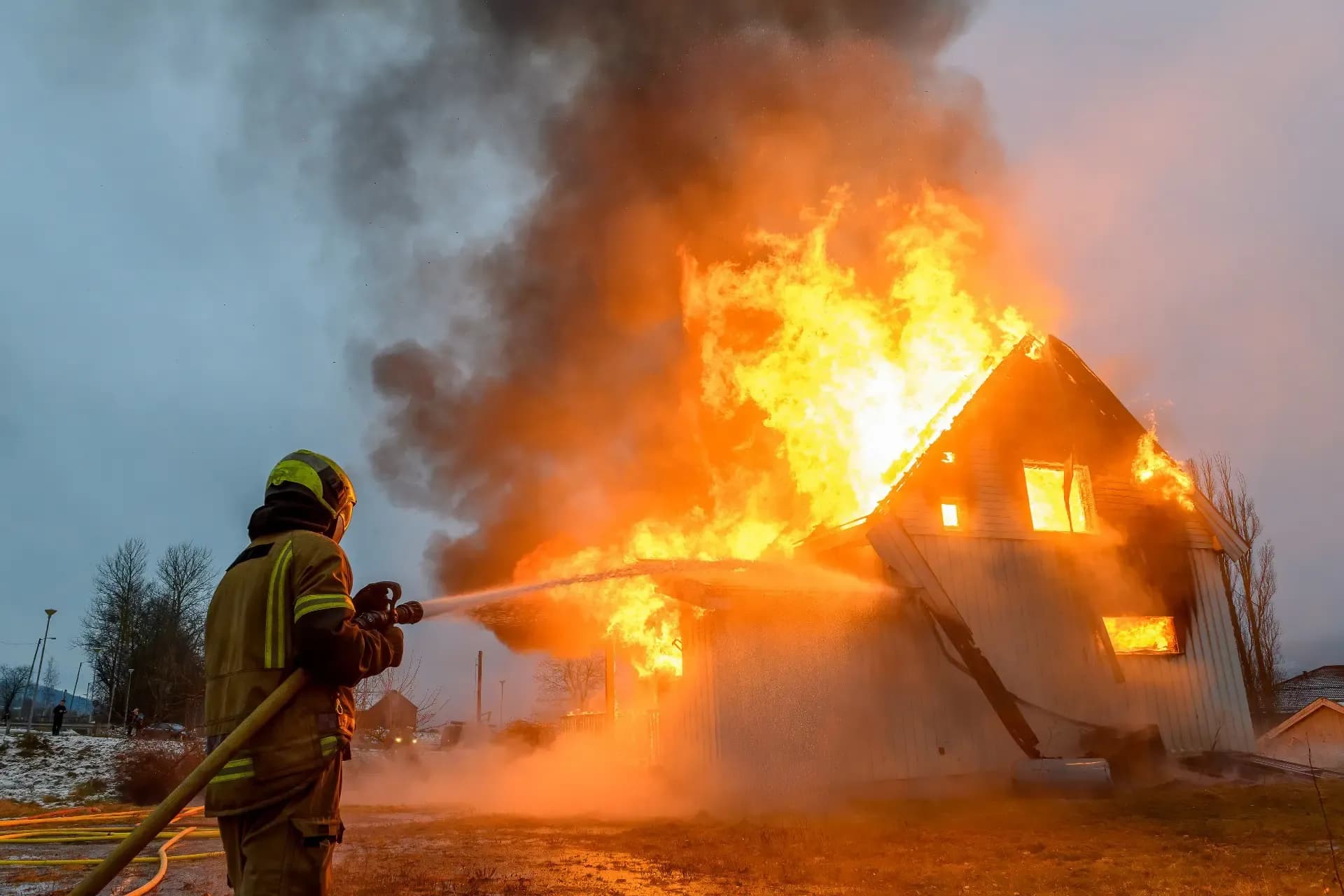
Fire-resistant means a material is engineered to slow ignition, limit how flames move across its surface, and keep smoke production low during a fire. For siding specifically, that standard is what makes all the difference. On a practical level, fire-resistant siding can give your family more time to get out and slow the spread of flames while help is on the way.
Why Homeowners Choose James Hardie Siding
James Hardie siding gets a lot of attention for its curb appeal, and rightfully so. But its fire performance is one of the strongest arguments for choosing it over other exterior materials.
Here's a closer look at how James Hardie siding supports a more fire-resistant home exterior:
1. A Fire-Resistant Formula
The foundation of James Hardie siding's fire performance starts with what it's made of. The product is composed of cement, cellulose, and silica. Cement and silica are naturally resistant to fire, and the cellulose is used in a way that doesn't drive flames across the surface. The result is a fiber cement product built to resist fire rather than contribute to it.
2. A Material That Won’t Feed the Flames
"Is Hardie board combustible?" is easily one of the most frequent questions homeowners ask us. The straightforward answer is no. James Hardie fiber cement siding is considered non-combustible under normal conditions, meaning it won't ignite or sustain burning the way wood, vinyl, or other polymer-based siding materials can.
3. The Highest Fire Rating
A Class A fire rating is the highest classification available for building materials, and James Hardie siding earns it. This rating comes from standardized testing that measures how quickly flames travel across a material and how much smoke it produces during fire exposure.
James Hardie achieves Class A status through both its fiber-cement composition and the precision of its manufacturing process, so it's not just a marketing label. It reflects how the product actually performs when the stakes are high.
4. Surface Protection That Slows the Spread
The flame spread index is one of the most telling metrics when evaluating a siding's fire performance. It measures how far flames travel across a material's surface during standardized testing. With a zero flame-spread score, James Hardie siding actively prevents fire from spreading across your walls.
That's a dramatic contrast to wood or vinyl. If a fire starts near your home's exterior, a siding material that allows flames to race across the wall can turn a manageable situation into something much worse, much faster.
5. Minimal Smoke During Exposure
Beyond flame spread, smoke production is another critical factor, and it's one that James Hardie siding handles well. Its smoke developed index comes in at less than 5 out of 100, a notably low figure for any exterior cladding product.
Both the flame spread and smoke development scores are derived from ASTM E84 testing, a widely recognized industry standard. Together, these two scores help explain why the Hardie board fire rating carries so much weight for homeowners who prioritize safety.
6. Strong Performance Under Heat
Testing numbers are important, but what homeowners ultimately care about is how a product holds up in a real fire. When flames, windblown embers, or heat from a neighboring structure reach your home, your siding is one of the first lines of contact.
Siding that ignites quickly can allow flames to move across the wall and reach vulnerable transition points such as corners, windows, and rooflines. James Hardie siding resists that progression, reducing the likelihood that the siding itself becomes part of the problem. It won't eliminate every hazard, but it contributes meaningfully to a more resilient exterior.
7. Trim That Supports the Whole System
Siding panels cover a lot of ground, but they're not the only parts of your exterior that matter in a fire. Trim around windows, doors, corners, fascia, and other transition points can become weak spots if the materials used there are combustible, even when the siding itself is not.
James Hardie offers fiber cement trim products designed to complement its siding line. Pairing non-combustible trim with James Hardie siding helps the entire exterior perform more consistently, rather than leaving vulnerable edges and seams as potential entry spots.
8. Long-Term Warranty Coverage
Choosing a product also means understanding the kind of backing it offers. James Hardie siding is covered by a 30-year non-prorated, transferable manufacturer warranty. Non-prorated means the coverage value doesn't decline over time, unlike with prorated warranties. If an issue arises years down the road, the protection remains meaningful.
The warranty's transferable nature is also worth noting for anyone who may sell their home. Buyers often appreciate knowing that a manufacturer's warranty can move with the property.
An Alternative to Wood & Vinyl Siding
Wood siding has an undeniable charm, but it's combustible. Once it catches, it can help flames move across the home's exterior and contribute to how quickly a fire spreads. Some wood products carry flame-spread ratings that may also factor into insurance considerations.
Vinyl siding presents a separate concern. It tends to soften, warp, or melt at relatively low temperatures, sometimes before direct flame contact even occurs. Radiant heat from a nearby structure fire can cause vinyl to fail before the fire ever reaches your wall.
James Hardie fiber cement siding holds up where both materials struggle. It won't melt, it won't ignite under normal conditions, and it doesn't act as a fuel source. For homeowners focused on what's protecting the outside of their home, that comparison is hard to ignore.
Frequently Asked Questions
Can James Hardie siding help lower my insurance premiums?
It may be possible depending on your insurer. Some companies recognize Class A-rated or non-combustible siding materials when calculating a home's risk profile.
We highly recommend contacting your insurance provider to ask whether James Hardie fiber cement siding could qualify for a discount on your policy.
Is James Hardie siding a good choice for wildfire-prone areas?
Absolutely. Its non-combustible composition and Class A fire rating make it well-suited for higher-risk environments.
For the best results, it should be part of a broader approach to fire-conscious exterior design that also considers roofing, vents, windows, and the landscaping around your home.
What part of a home’s exterior is most vulnerable during a fire?
Vulnerable areas often include corners, window and door trim, roofline transitions, vents, and gaps where different materials meet. That’s why fire-resistant siding performs best when the surrounding details are installed carefully.
Does James Hardie siding need special maintenance to stay fire-resistant?
The fiber-cement material itself provides fire-resistant performance, but routine maintenance still matters for the overall exterior. Keeping your landscaping neatly trimmed and checking on caulked joints and trim transitions will ensure everything stays in peak condition.
Give Your Home the Defense It Deserves
If fire resistance is weighing on your decision, James Hardie is well worth a conversation. Safe Harbor Exteriors is a James Hardie Elite Preferred Contractor serving Kansas City, and our team is happy to walk you through how fiber cement compares to vinyl, wood, and other exterior options without steering you toward anything your home doesn't need.
Take a look at available styles and colors, browse our project gallery, or reach out to schedule a free consultation when you're ready to take the next step.
Get Your Free Estimate
in Just 3 Simple Steps
Start by Entering Your Zip Code Below
Latest Blog Posts
Choosing siding for your Kansas City home isn’t a small decision, especially with weather that swings from humid summers to sudden cold fronts and frequent hail...
Replacing siding usually starts with a simple question: What will hold up best on my home? For many Kansas City homeowners, that answer isn’t always obvious...
When we help homeowners choose a new front door, we always look for products that perform well in Kansas City’s weather while delivering long-term value. One of the most trusted names we work with is ProVia.
Reviews
We talked to multiple companies while deciding who to use for the exterior of our home. Safe Harbor was transparent, fast, and offered James Hardie siding compared to all the other companies only offering vinyl. Safe Harbor was much more affordable than many of the other companies, who just wanted as much money as possible. We are extremely happy with our siding, soffit, fascia, flashing, gutters, windows and the guarantee that comes with their work. If there was any more work to be performed, without a doubt, we would chose safe Harbor again.
Safe Harbor installed James Hardie siding, soffits, and gutters. The install was meticulous and our home was left cleaner than when the company showed up. The level of detail in the install was beyond expectation! We are so pleased with the quality of the work and the professionalism of the install team!



Trusted Brands, Partners & Awards




Contact Us