What Are the Pros and Cons of Hardie Siding?
When your siding starts showing its age, the issue goes well beyond looks. Cracks, gaps, soft spots, and failing seams can let moisture sneak behind your walls, and once that happens, repair bills tend to climb fast. That's why so many homeowners around Shawnee and the greater Kansas City area lean on Safe Harbor Exteriors to walk them through their siding options before things get worse.
Hardie board siding comes up often in those conversations because it sits at an interesting crossroads of durability, style, and value. Of course, that doesn't mean it’s ideal for every house or budget. Like any exterior product, James Hardie fiber-cement has its strengths and trade-offs. Here's an honest look at both sides, so you can decide if it deserves a spot on your shortlist.
The Fiber Cement Difference
Made from Portland cement, sand, and cellulose fibers, Hardie board falls into the fiber-cement category. That recipe gives it much of the warmth and visual appeal homeowners love about wood, but without the constant worry about rot, termites, or repainting every few years.
The cement and sand provide strength, density, and resistance to fire and harsh weather exposure. The cellulose fibers help the boards hold their shape and stay workable enough to be milled into various profiles, textures, and finishes. And because the material isn't plastic or traditional lumber, it stands up to moisture, bugs, sun, and shifting temperatures in ways those materials can't match.
For homes throughout the Kansas City Metro, that composition is important. Siding here has to handle muggy summers, deep winter freezes, spring storms, wind-driven rain, and the occasional hailstorm. What your siding is made of often decides how long it keeps doing its job.
The Benefits That Matter Most Over Time
James Hardie siding offers plenty of upside, especially for homeowners planning to stay put for a while and hoping for an exterior that doesn't require constant attention.
These are the perks that tend to win people over:
Long Lifespan
One of the biggest selling points of Hardie board is its longevity. With proper installation and a bit of upkeep along the way, fiber cement siding can serve a home for up to 50 years. That puts it well ahead of many siding products that need to be swapped out sooner.
When the work is done right, you can go decades without thinking about another siding project.
Reliable Resistance
Wood siding has a charm all its own, but water is its enemy. Once moisture works its way into the boards, you can end up with swelling, soft patches, rot, mold, and even structural worries. Fiber cement doesn't soak up water the way wood does, which removes one of the most common reasons siding starts to fail.
Weather Durability
Kansas City weather can really test an exterior. Hardie holds up well to demanding conditions without denting as easily as thinner products or cracking the way vinyl sometimes does.
It's also backed by the HardieZone® system, which means the boards are engineered for specific climate regions.
Minimal Maintenance
Hardie board isn't completely hands-off, but caring for it is much simpler than keeping up with wood siding. Routine upkeep usually means rinsing the boards twice a year with a garden hose and a medium-bristle nylon brush to remove dirt, dust, and pollen.
ColorPlus® Technology
You can choose pre-primed Hardie siding that gets painted after installation, or pick James Hardie products finished with ColorPlus® Technology. ColorPlus is a factory-applied finish that's baked onto the boards before they ever reach your home.
ColorPlus Technology also comes with a 15-year limited warranty against cracking, peeling, and fading, adding another layer of confidence in your finish choice.
Style Variety
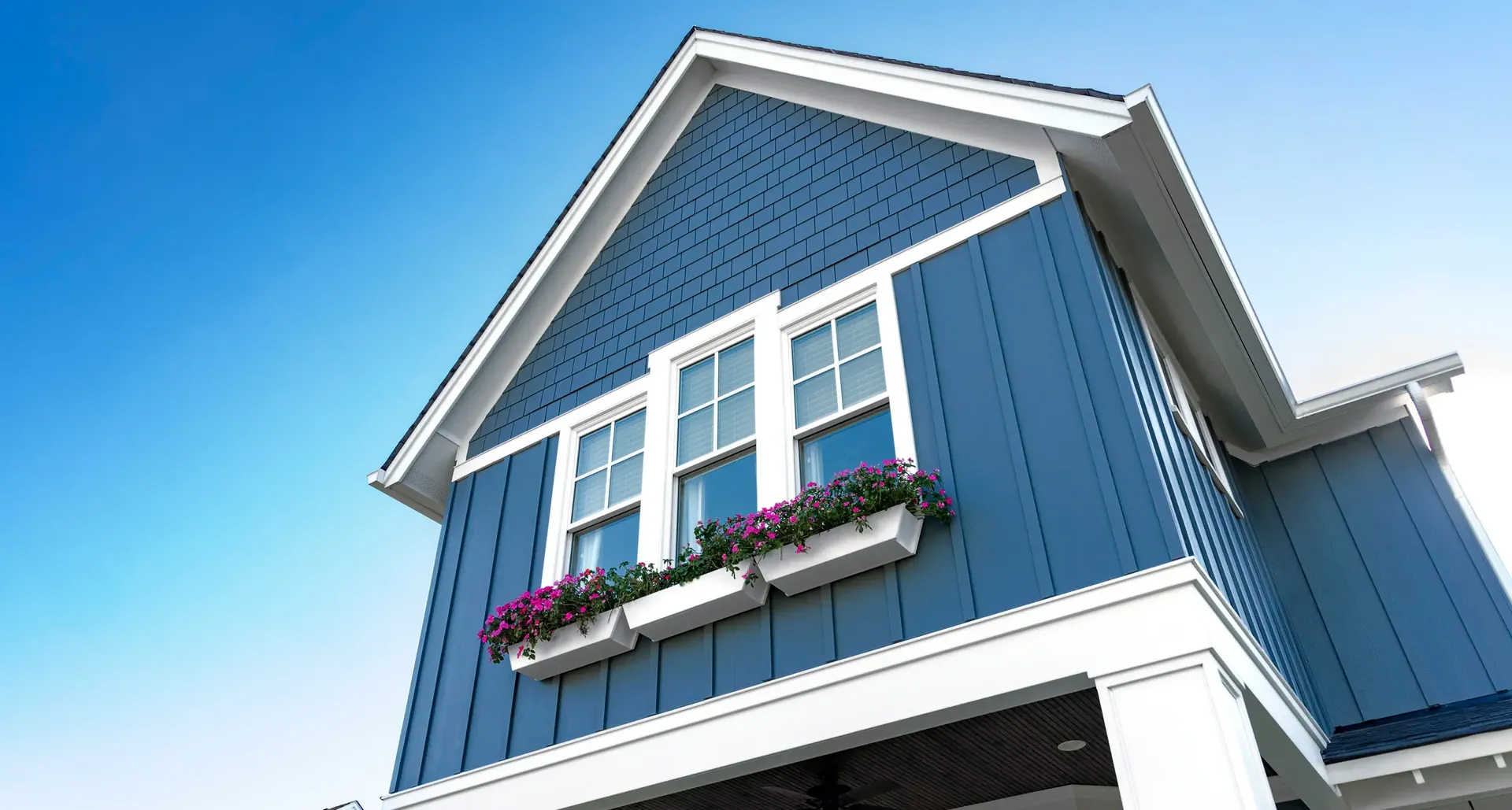
One of the best things about Hardie is that it doesn't box you into a single look. It works beautifully on traditional, modern, craftsman, farmhouse, cottage, and transitional homes all across the Kansas City area.
Popular James Hardie products include:
HardiePlank® Lap Siding
HardiePanel® Vertical Siding
HardieShingle® Siding
HardieTrim® Boards
HardieSoffit® Panels
With so many profiles to mix and match, it's easy to land on a combination that fits your home's personality without compromise.
Built-In Value
Hardie is often seen as one of the higher-ROI exterior upgrades because it boosts curb appeal and reduces future maintenance needs. If resale is on your mind, fiber cement helps a home feel well cared for before buyers ever cross the threshold.
The payoff isn't only about the sale price, either. You'll also notice it in fewer repairs and longer intervals between replacements, something cheaper siding rarely delivers.
Practical Downsides to Keep in Mind
A fair conversation about Hardie has to cover the downsides, too. The disadvantages aren't necessarily dealbreakers, but they're worth understanding before you commit.
Higher Upfront Cost
Hardie board generally costs more initially than vinyl or basic wood siding. The material itself is more substantial, and putting it on a house takes more skill and time. For anyone working with a tight project budget, that price gap can be a serious factor.
Not a Job for Beginners
Hardie is thick, heavy, and far less forgiving than vinyl. It needs to be cut, fastened, flashed, spaced, and finished correctly for the whole system to perform as it should. Sloppy work can lead to moisture trouble, cosmetic issues, and even warranty complications.
That's also why unusually low bids deserve a closer look. A cheaper quote can be tempting, but if the crew isn't following James Hardie's published requirements, the siding may fall short.
Easygoing, But Not Effortless
Hardie cuts way down on the upkeep that wood demands, but it still asks for basic care. Homeowners need to plan to rinse the boards now and then, keep an eye on caulking and clearances, and tackle small issues before they snowball.
So, Is James Hardie Fiber Cement Worth It?
For most homeowners in this area, the answer comes down to how you plan to use your home. If you're settling in, raising a family, or tired of revisiting the same exterior projects every few years, Hardie makes sense. The upfront commitment trades a higher initial spend for a calmer ownership experience down the road.
It's a tougher sell if you're flipping a property, working with a strict short-term budget, or planning to move within a year or two. In those cases, a lighter siding choice may stretch your dollars further for what you're trying to accomplish.
The bottom line: Hardie rewards patience. It's built for homeowners who'd rather invest once and move on than chase repairs and replacements.
Frequently Asked Questions
How long does Hardie board siding last?
Hardie board siding can last up to 50 years when correctly installed and maintained over time. Its lifespan depends on installation quality, proper clearances, routine cleaning, and how well small exterior concerns are addressed as the home ages.
What are the biggest disadvantages of Hardie board siding?
The main disadvantages are higher initial cost, more involved installation, and basic maintenance requirements. It isn’t usually the cheapest siding option, and it needs an experienced installer who understands James Hardie’s requirements.
Is Hardie board better than vinyl siding?
Hardie board generally offers a more substantial appearance, better durability, and stronger resistance to weather and impact than many vinyl products. Vinyl usually costs less at the start, so the better choice depends on your budget, timeline, and expectations for maintenance.
Is Hardie board better than wood siding?
Hardie board gives homeowners a wood-like look without many of wood’s biggest drawbacks. Unlike traditional wood siding, fiber cement doesn’t attract termites, doesn't rot the same way, and doesn't require the same level of repainting and upkeep.
Let’s Look at Your Siding Together
You don't need to have it all figured out before reaching out. If you're trying to decide whether Hardie is the right call for your home, Safe Harbor Exteriors can take a thorough look and help you compare next steps without any pressure.
James Hardie products carry a 30-year transferable, non-prorated limited warranty, and every siding project we complete is also backed by our 10-year workmanship warranty covering labor and materials. Get started with a free estimate today.
Get Your Free Estimate
in Just 3 Simple Steps
Start by Entering Your Zip Code Below
Latest Blog Posts
Choosing siding for your Kansas City home isn’t a small decision, especially with weather that swings from humid summers to sudden cold fronts and frequent hail...
Replacing siding usually starts with a simple question: What will hold up best on my home? For many Kansas City homeowners, that answer isn’t always obvious...
When we help homeowners choose a new front door, we always look for products that perform well in Kansas City’s weather while delivering long-term value. One of the most trusted names we work with is ProVia.
Reviews
We talked to multiple companies while deciding who to use for the exterior of our home. Safe Harbor was transparent, fast, and offered James Hardie siding compared to all the other companies only offering vinyl. Safe Harbor was much more affordable than many of the other companies, who just wanted as much money as possible. We are extremely happy with our siding, soffit, fascia, flashing, gutters, windows and the guarantee that comes with their work. If there was any more work to be performed, without a doubt, we would chose safe Harbor again.
Safe Harbor installed James Hardie siding, soffits, and gutters. The install was meticulous and our home was left cleaner than when the company showed up. The level of detail in the install was beyond expectation! We are so pleased with the quality of the work and the professionalism of the install team!



Trusted Brands, Partners & Awards





Contact Us